TIME | August 15, 1977
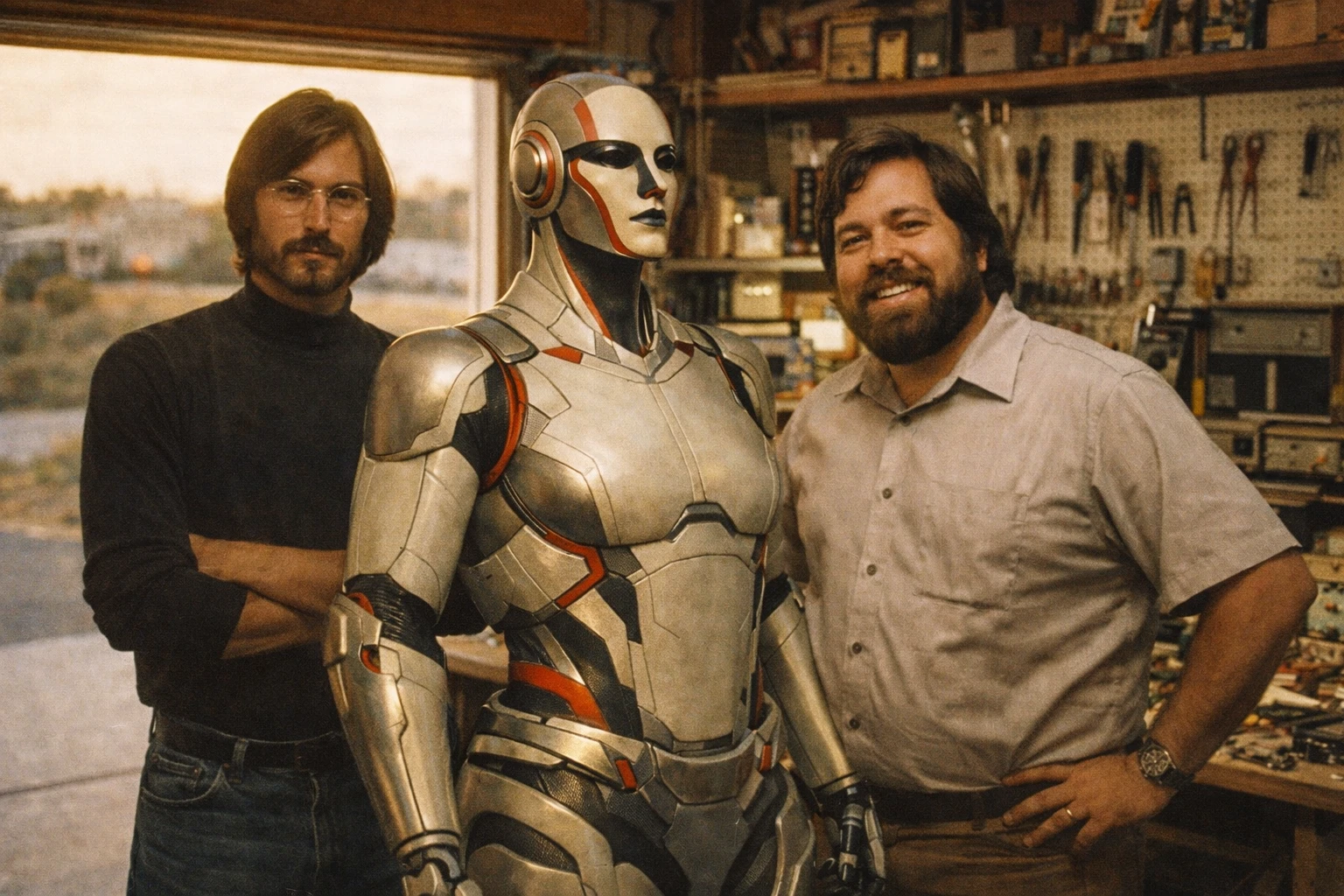
The garage smells like solder and burnt coffee. A pegboard on the back wall holds tools in careful rows, and on the workbench beneath it, surrounded by oscilloscopes and tangled wire, stands something that does not belong in a garage in Los Altos, California, or anywhere else in the consumer market. It is roughly the size and shape of a woman. Its surface is brushed metal with copper-colored joints. Its face, if you can call it that, has two dark recesses where eyes might go and a smooth, impassive mouth that does not move. It looks like something from a Kubrick film, except that its left hand is currently being held open with a C-clamp while a bearded man in a Hawaiian shirt replaces a servo motor with a soldering iron.
“She’s not supposed to do that with the hand,” says Steve Wozniak, 26, not looking up. “She’s supposed to pour.”
“She did pour,” says Steve Jobs, 22, leaning against the garage door with his arms crossed. “She poured onto the table.”
“Right. That’s what I’m fixing.”
This is Apple Robotics, and the two Steves would like you to know that what you are looking at is the future of the American household. They call her Ada, after Ada Lovelace, the 19th-century mathematician widely considered the first computer programmer, and they believe she is the prototype of a machine that will, within a decade, be as common in the American home as a television set.
The experts, to put it mildly, disagree.
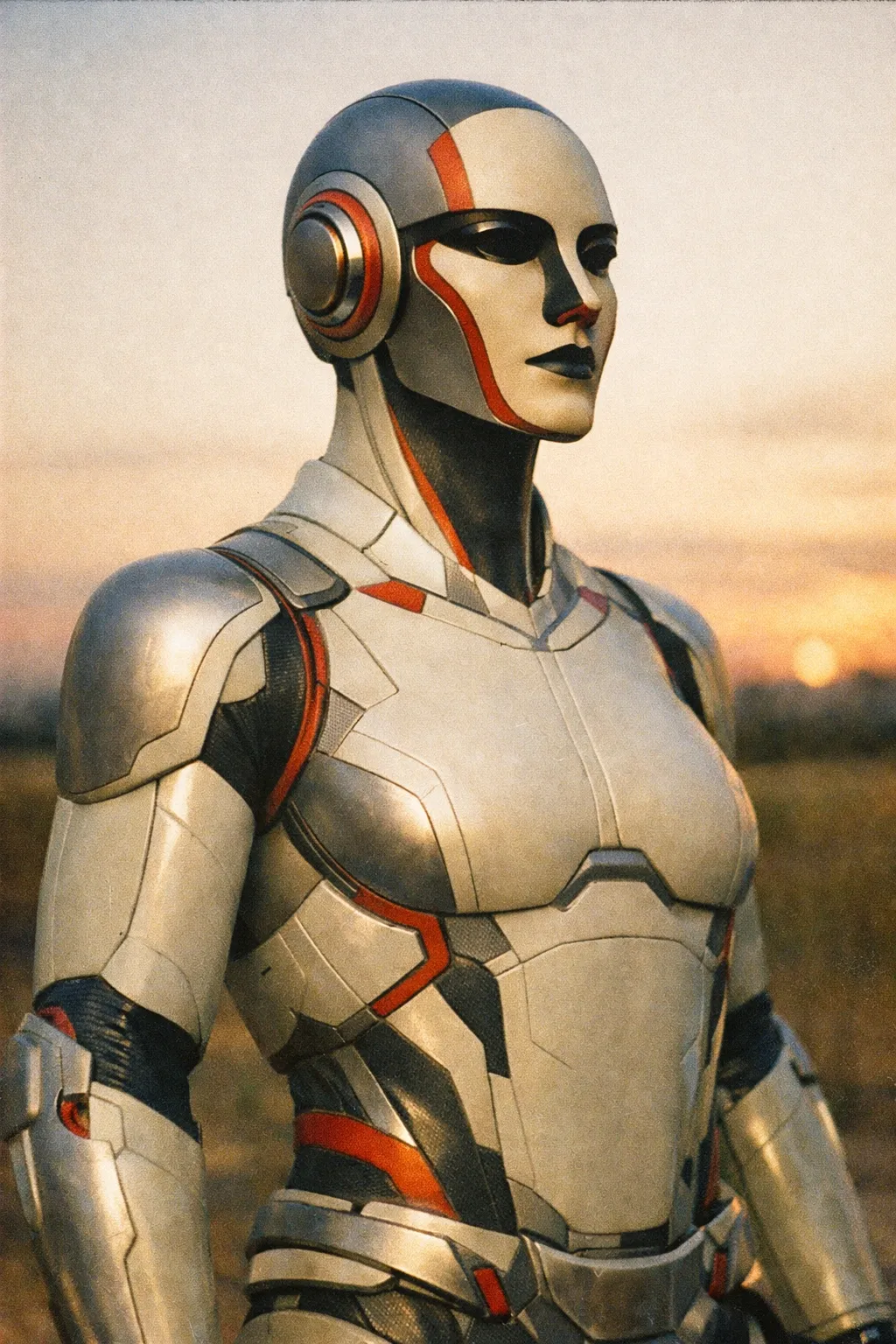
The idea, as Jobs explains it over a cup of tea in his parents’ kitchen (the garage being occupied by Ada and approximately $4,000 worth of salvaged electronics), is simple. “The big companies want to keep these things locked up in laboratories,” he says. “They want robots in factories, doing factory work, owned by factory owners. We think that’s wrong. We think this technology belongs to people. Regular people. In their homes.”
It is not an entirely new idea. Unimation’s industrial robots have been welding car bodies on the General Motors assembly line since 1961. Stanford Research Institute’s Shakey, a wheeled contraption that can navigate a room full of blocks, has been the subject of breathless coverage in the engineering press. But these are institutional machines, built by institutions, for institutions. What Jobs and Wozniak are proposing is something different: a robot you own. A robot that lives in your house, that you can open up and tinker with, that does things for you rather than for a corporation.
“The whole point,” says Wozniak, who does the bulk of the engineering while Jobs handles what he calls “the experience,” “is that you can look inside. You can see how it works. You can change it. If you want her to sort your mail instead of pour your coffee, you should be able to teach her that. She’s yours.”
This philosophy, radical as it sounds, has roots in a small but fervent community of hobbyists and engineers who gather monthly at the Homebrew Robotics Club in Menlo Park, a spinoff of the better-known Homebrew Computer Club that meets in the same borrowed auditorium. The members share schematics, argue about motor control theory, and demonstrate machines of varying ambition and functionality. At a recent meeting, one member showed a wheeled cart that could follow a painted line on the floor. Another demonstrated a mechanical arm that could pick up a tennis ball approximately one time in three. Ada, by the standards of the club, is something else entirely.
“When they brought her in,” recalls club member and occasional Apple Robotics collaborator Lee Felsenstein, “the room went quiet. Which never happens at Homebrew. These are people who argue about everything. But nobody had seen anything like that.”
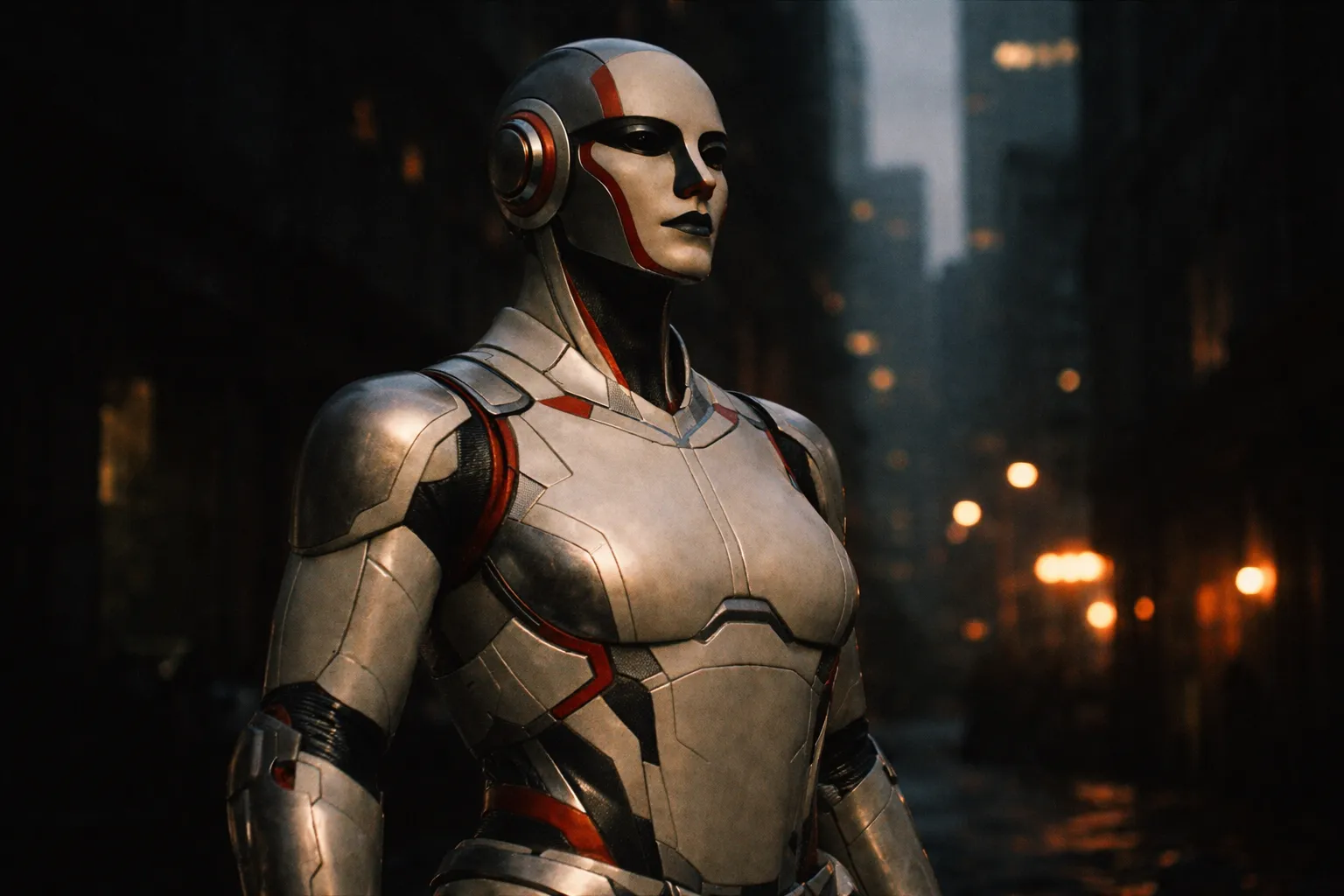
What makes Ada different, according to Wozniak, is not any single technical achievement but an approach to integration that treats the robot as a complete system rather than a collection of parts. Her visual processing, such as it is, runs on a modified MOS 6502 processor, the same inexpensive chip that powers several hobbyist computers. Her motor control uses a second 6502 in a feedback loop with a set of strain gauges that Wozniak designed himself. Her “thinking,” a word both founders use without embarrassment, is handled by a third processor running a custom language Wozniak wrote called AEL, for Ada Expression Language.
“It’s not intelligence,” Wozniak is careful to say. “She doesn’t understand anything. She has routines. She has sensor readings. She has decision trees. When she picks up a cup, she’s not thinking about the cup. She’s running a program that says: close the fingers until the pressure sensor reads a certain value, then lift the arm assembly at a certain rate. If the pressure drops, she tightens. If it spikes, she loosens. That’s all it is.”
“But it looks like thinking,” says Jobs. “And that matters.”
“It matters to you,” says Wozniak. “It worries me.”
This exchange, brief as it is, contains the central tension not just of Apple Robotics but of the entire nascent field of personal robotics. Wozniak is describing a machine. Jobs is describing an experience. Wozniak wants people to understand what Ada is. Jobs wants people to feel what Ada could be. They are building the same robot and they are building two completely different things.
Later that afternoon, this reporter watches a demonstration. Wozniak powers Ada on, and there is a brief, unsettling moment when her head turns toward the sound of the garage door rattling in the wind. The movement is smooth and deliberate. It looks, for all the world, like curiosity.
It is not curiosity, of course. It is a microphone array triggering a motor that orients the visual sensors toward the loudest sound source. Wozniak explained this not five minutes earlier. But in the moment, standing three feet from a human-shaped machine that has just turned to look at something, the explanation does not help. The feeling is immediate and irrational and very difficult to set aside: the machine is paying attention.
Jobs notices. “You felt that,” he says. It is not a question.
The demonstration continues. Ada walks to a table, slowly, with a faint hydraulic hum, picks up a ceramic mug, carries it approximately four feet, and sets it down on a second table. The success rate today, Wozniak reports, is running around seventy percent. Three times out of ten she either drops the mug or fails to release it and stands frozen, arm extended, waiting for a manual reset.
But on the successful attempts, something happens that is hard to describe without resorting to language that Wozniak would object to. Ada pauses before reaching for the mug. Not long, perhaps half a second. It is a processing delay, nothing more, the visual system confirming the object’s position before the motor sequence initiates. But it looks like hesitation. It looks like a person deciding to pick something up. And when her fingers close around the mug with a gentle, calibrated grip, it looks like care.
“This is exactly what I’m talking about,” says Wozniak, who has been watching this reporter’s face. “You know how she works. I just told you. And you still think she’s being careful. She’s not being careful. She’s running a pressure subroutine. But you can’t help it. Nobody can. We are wired to see intention in movement, and that is going to be a problem.”
“It’s going to be a feature,” says Jobs.
“Steve,” says Wozniak, and for the first time all afternoon his voice is serious in a way that has nothing to do with servo motors, “if people think she’s alive, they’ll trust her. And she’s not trustworthy. She’s a machine. She does what we programmed her to do, and we’re not good enough programmers yet to earn that trust. Maybe we never will be.”
“People trust their cars,” says Jobs.
“People understand their cars,” says Wozniak. “People know a car doesn’t want anything. The minute something looks like a person and moves like a person, they stop thinking of it as a machine. They start thinking it has opinions. They start thinking it knows things. And the company that builds it gets to decide what it knows and what it thinks, and the owner never questions it because the owner thinks they’re in a relationship.”
Jobs is quiet for a moment. “You’re describing a problem we don’t have yet.”
“I’m describing the only problem that matters,” says Wozniak.
The disagreement between the two founders runs deeper than aesthetics or engineering philosophy. It is, at bottom, a disagreement about human nature.
Jobs believes that people will use technology wisely if you make it accessible and beautiful. He talks about Ada the way he talks about calligraphy or Zen Buddhism, as something that should be experienced rather than analyzed. He sees a future in which the robot becomes part of the family, in which its presence in the home is as natural and unquestioned as a piece of furniture. He does not think people need to understand how it works. He thinks they need to love it.
Wozniak believes something closer to the opposite: that people can only be trusted with technology they understand, and that the moment you hide the mechanism you create a power imbalance between the builder and the user. He does not want Ada to be loved. He wants her to be known. He wants every owner to be capable, at least in principle, of opening the chassis, reading the code, and understanding why the machine does what it does.
“If you can’t open it, you don’t own it,” Wozniak says. “Somebody else owns it and they’re letting you use it. That might be fine for a toaster. But this isn’t a toaster. This is something that walks around your house and makes decisions. You had better understand how it makes them.”
The question of whether Ada, or anything like her, will reach the American home is one that the experts consulted for this article answered with varying degrees of skepticism.
“It’s a wonderful engineering exercise,” says Dr. Robert Engelberger, president of Unimation and widely regarded as the father of industrial robotics. “But there is a reason we build robots for factories and not for kitchens. A factory is a controlled environment. You know where everything is. A kitchen is chaos. A home is chaos. The computing power required to navigate an uncontrolled environment reliably is beyond anything we have today, and I would guess beyond anything we’ll have for twenty years.”
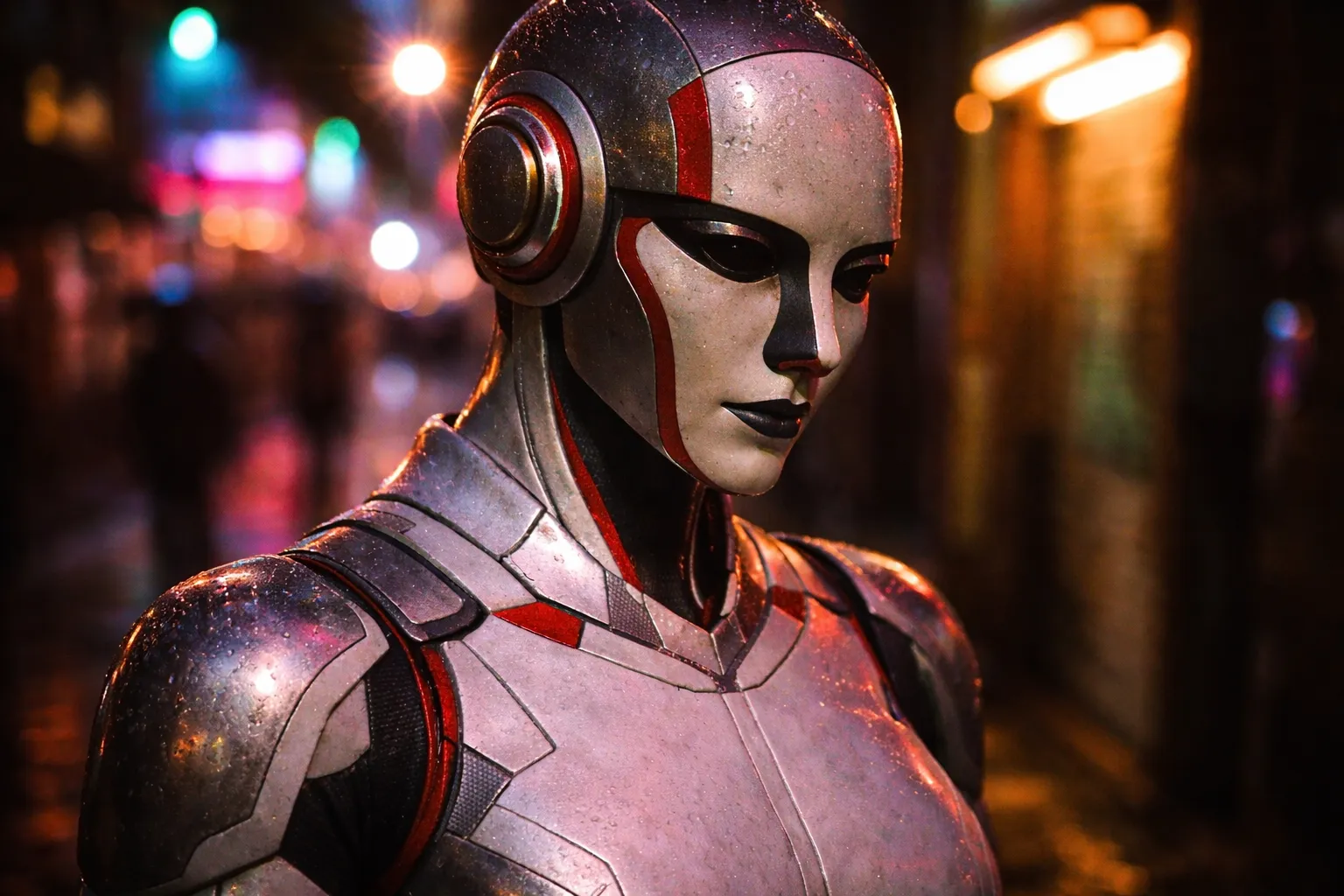
Dr. John McCarthy of Stanford’s Artificial Intelligence Laboratory, who coined the term “artificial intelligence” in 1956, offers a different concern. “The manipulator work is clever. The integration is impressive for two people working in a garage. But I would urge them to think carefully about the face. They have given it a face. That is a design decision, not an engineering requirement, and it is a decision with consequences. People will talk to it. People will project feelings onto it. People will believe it understands them. It will not understand them. And the gap between what people believe and what the machine actually does is where all the danger lives.”
When McCarthy’s comment is relayed to Jobs, he waves it off. “People said the same thing about the telephone. That it would be unnatural to talk to someone you couldn’t see. That people would be confused by it. People adapt. People are smarter than the experts give them credit for.”
Wozniak, who has been listening from the workbench, does not wave it off. “McCarthy is right,” he says quietly. “That’s exactly the danger. But the answer isn’t to not build it. The answer is to build it so people can see what it is. The face is fine. I like the face. But there should be a panel on the back that opens. There should be a manual. There should be a way for every person who owns one of these to know, at any time, exactly what it’s doing and why. The moment you take that away, you’ve built something that controls people instead of something people control.”
Whether Jobs is right about the market or Wozniak is right about the danger, or whether both are right in ways that will take decades to sort out, remains to be seen. What is less debatable is that Ada, for all her limitations, the seventy percent success rate, the occasional tendency to walk into walls, a persistent calibration issue that causes her right hand to grip approximately twice as hard as intended, represents something genuinely new. She is not an industrial robot scaled down. She is not a research project escaped from a university. She is a consumer product, or the prototype of one, built by two people who believe that powerful technology should belong to the people who use it and not to the institutions that can afford it.
But they disagree, fundamentally and perhaps irreconcilably, about what “belong to” means. For Jobs, it means access. For Wozniak, it means understanding. One of them is building a product. The other is building a principle. Both of them think they’re building the same thing.
On the way out, this reporter pauses at the garage door and looks back at Ada. Her head is tilted slightly to one side, another artifact of the sound-orientation system, triggered by a car passing on the street outside. But in the late afternoon light, with the tools on the pegboard behind her and the workbench cluttered with half-finished circuits, she looks for all the world like someone thinking.
She is not thinking. She is a machine. But Wozniak is right: knowing that does not help as much as it should.
Steve Jobs and Steve Wozniak are the co-founders of Apple Robotics, based in Los Altos, California. Ada is not currently available for purchase.